Exploring Conceptual Selling – Understanding Modern Sales Trends Correctly
Reading time: 6 minutes
Selling is not just about closing deals for the business, but also about creating real value for the customer. In a rapidly changing market, sales methods must also adapt to meet the ever-increasing needs of customers. One modern sales trend that businesses should pay attention to is ” Conceptual Selling “.
What is Conceptual Selling?
Conceptual Selling was developed by Robert Miller and Stephen Heiman in the 1980s. These two authors recognized that traditional sales methods, focused on introducing products and persuading customers to buy, were no longer effective in an increasingly complex business environment. They argued that, to sell successfully, salespeople needed to understand customer needs and develop a suitable solution.

Vietnam’s leading AI-powered multi-channel virtual call center.
Conceptual Selling is based on several concepts:
- Customers don’t buy products, they buy solutions: Customers don’t buy a product to own it, they buy a product to solve a problem or achieve a goal.
- Listening is key: To truly understand customer needs, salespeople need to take the time to listen to their customers.
- Developing a solution: Sales staff need to develop a solution that meets the customer’s needs.
In summary, Conceptual Selling is an effective sales method that helps businesses increase conversion rates, shorten sales cycles, and build long-term relationships with customers.
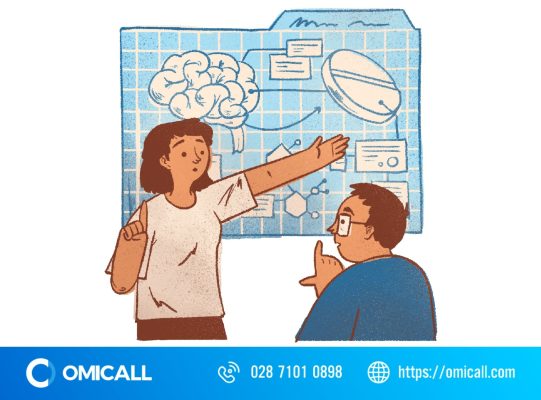
What is Conceptual Selling?
Benefits of the Conceptual Selling method
Conceptual Selling offers numerous benefits for businesses and salespeople, including:
- Increase closing rates: When salespeople understand customer needs, they can offer suitable solutions and persuade customers to make a purchase.
- Shorten the sales cycle: Understanding customer needs allows salespeople to focus on key issues, thereby shortening the sales process.
- Building long-term relationships with customers: When customers feel listened to and understood, they will have a positive impression of the business and sales staff, and are more likely to return for future purchases.
- Building an effective sales system: The Conceptual Selling method can be applied to all sales staff in a business, thereby helping to build an effective sales system.
Advantages and disadvantages of the Conceptual Selling method.
Advantage
- Listening to and understanding customer needs is crucial in any sales process. The Conceptual Selling method helps salespeople focus on this, thereby increasing their chances of closing a deal.
- This method can be applied to all industries and products.
- This method helps build long-term relationships with customers.
Disadvantages
- This method requires salespeople to have the skills to listen and understand customer needs.
- This method may take more time than other sales methods.
How can Conceptual Selling be applied to sales activities?
To apply the Conceptual Selling method to sales operations, businesses need to follow these steps:
- Planning and Strategy: Businesses need to clearly define the objectives of implementing the Conceptual Selling method. Then, they should develop a specific plan and strategy to carry out this method.
- Exploring the customer’s perspective and connecting with the product: Salespeople need to take the time to explore the needs and desires of their customers. From there, they can find common ground between the company’s products/services and the customer’s needs.
Why is “listening” such an important element of Conceptual Selling?
Listening is a crucial element of Conceptual Selling because it helps salespeople understand customer needs. When salespeople listen to customers, they will be able to:
- Identifying the customer’s true needs: Customers often don’t explicitly state their real needs. They only mention the problems they’re facing. Therefore, salespeople need to listen to understand how those problems are affecting the customer and what they hope to achieve.
- Identify the benefits that customers desire: Customers buy products not only to solve problems, but also to achieve certain benefits. Therefore, salespeople need to listen to understand the benefits that customers want.
- Identify customer expectations: Customers have certain expectations regarding products and services. Therefore, salespeople need to listen to understand those expectations.
Three stages for asking questions
To uncover a customer’s perspective, salespeople need to use questioning skills. There are three stages in the questioning process:
- Phase 1: Ask open-ended questions: Open-ended questions help customers share their thoughts and feelings. For example: “Can you tell me more about your project?”
- Phase 2: Asking Confirmation Questions: Confirmation questions help salespeople better understand what the customer has shared. For example: “If I understand correctly, you are having difficulty managing your time?”
- Phase 3: Ask open-ended questions: Open-ended questions help customers think about potential solutions. For example: “If you could solve this problem, what impact do you think that would have on your work?”
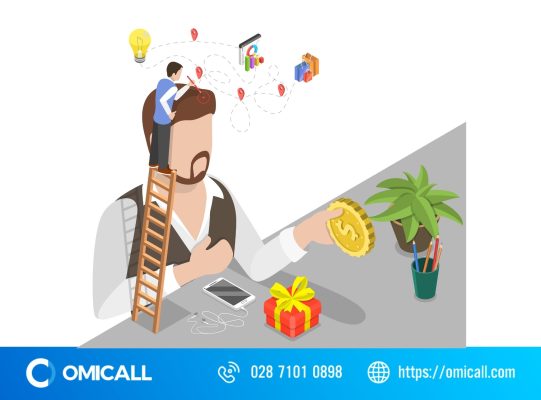
Three stages for asking questions
In conclusion
Conceptual Selling is an effective sales method that helps businesses increase conversion rates, shorten sales cycles, and build long-term relationships with customers. To effectively apply this method, businesses need to develop specific plans and strategies, while also focusing on listening skills.
VIHAT TECHNOLOGY Co., Ltd
Headquarters: ViHAT Building – 06 Street No. 16 (Him Lam Residential Area) – Hiep Binh Chanh Ward – Thu Duc District – Ho Chi Minh City
Hanoi Branch: Floor 15, LADECO Building, 266 Doi Can, Ba Dinh, Hanoi
Cambodia Branch: Thida Rath #154 St. 33MC, Sangkat Steung Meanchey, Khan Mean Chey, Phnom Penh

-
 What is TikTok advertising? Advertising policies and how it works.
-
 Exploring Conceptual Selling – Understanding Modern Sales Trends Correctly
-
 What is a KOC? Distinguishing between KOLs and KOCs.
-
 What Are Customer Insights? Revealing How to Effectively Uncover Them
-
 What is Digital Marketing? 10 Effective Forms of Digital Marketing
-
 What is Online Marketing? Types of Online Marketing